

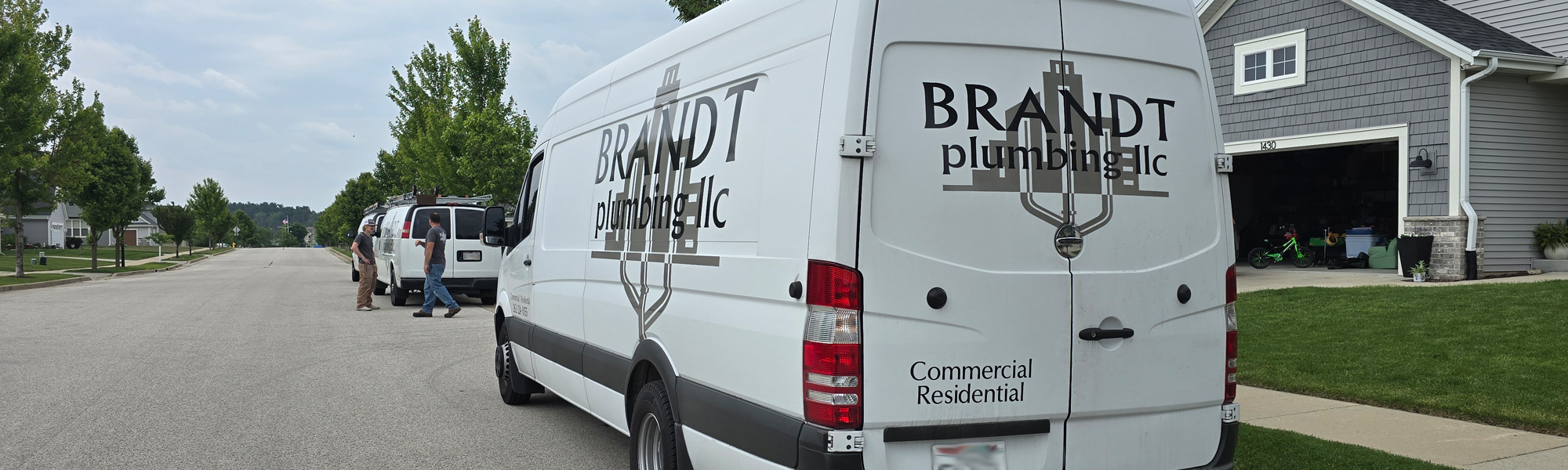
At Brandt Plumbing we provide free, no-obligation quotes. Contact us today if you need a plumbing contractor.
According to Remodeling Magazine, a minor kitchen remodel can have an ROI of around 81%. Get your estimate today!
Usually due to a worn-out washer, O-ring, valve seat, or cartridge that needs replacing.
Common causes include mineral buildup, partially closed valves, leaks, or corroded pipes.
A faulty flapper or fill valve is often to blame — a plumber can determine what to replace.
Sewer gas can escape due to dry P-traps or buildup of organic material in the pipes.
It’s usually near where the water line enters your home — often in a basement, garage, or utility area.
Shut off the main water supply immediately and call a plumber right away to minimize water damage.
Sediment buildup at the bottom of the tank is likely — it should be flushed out periodically.
Not really — they can corrode pipes and harm the environment. Mechanical cleaning or enzyme-based cleaners are safer.
You may have a hidden leak, a running toilet, or dripping fixture wasting water.
Could be low-flush design issues, pipe blockage, or flushing non-flushable items like wipes or paper towels.
Likely a clog in your main drain or sewer line — professional inspection is recommended.
Insulate exposed pipes, keep cabinet doors open for airflow, and let faucets drip during extreme cold.
Copper: 50+ years, PEX: 40–50 years, PVC: 25–40 years, galvanized steel: 20–50 years.
Your water heater may be undersized, have sediment buildup, or failing parts.
Temporary fixes like tape or clamps work short-term, but permanent repair requires proper tools and fittings.
Rust, sediment, or corrosion inside old pipes or your water heater tank.
Food buildup, grease, or jammed impellers — try cleaning with ice, citrus peels, and a small brush.
That’s “water hammer,” caused by sudden pressure changes — installing an air chamber or arrestor can fix it.
It can be DIY’d, but a professional ensures proper sealing, venting, and leak-free installation.
Grease, oil, coffee grounds, wipes, feminine products, and fibrous food scraps — all can cause clogs.
Possible stuck float switch, high groundwater levels, or a failing check valve.
Once a year is ideal — to catch leaks, corrosion, and inefficiencies early.
Hard water contains minerals like calcium and magnesium that can leave deposits; soft water is treated to remove them.
Any time you see water damage, slow drainage throughout the house, sewage smell, or loss of water pressure.
Brandt Plumbing
Masters Plumber License
#641944
Proud member of:
